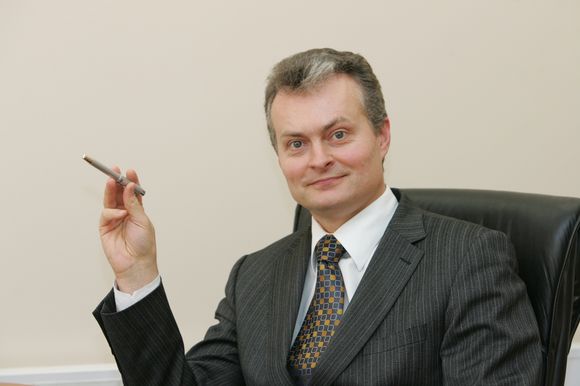
"Prime Minister Andrius Kubilius is the biggest proponent of Lithuania's euro entry in 2014, and, we have to admit, this is in his hands," he said while presenting SEB Bankas' latest macroeconomic forecast.
Nausėda said that for the government's efforts to bring the fiscal deficit down to the Maastricht limit to be successful, GDP growth must be 2.5 to 3 percent.
"We are sticking to our opinion that, most probably, (the Maastricht criterion) could be met only if 2.5-3 percent GDP growth was achieved. Otherwise, it would be very difficult, particularly in 2012, when there will be a considerable debt servicing burden," he said.
SEB Bankas forecasts that the fiscal deficit will reach 3.5 percent of GDP this year and will widen to 4 percent next year. Nausėda notes that tax revenue collection data for January through February were "very attractive".
"The inflation criterion remains a problem, but it no longer looks so unrealistic," the analyst said.
SEB Bankas predicts that the country's average annual inflation rate will ease to 2.5 percent this year, from 4.1 percent last year, and then accelerate somewhat to 3 percent in 2013. This is unchanged from the bank's forecasts released last December.
No euro in 2014
In Nausėda's view, it is hardly likely that Lithuania will adopt euro in 2014.
“There is a 60 percent chance that we will not comply with the Maastricht criteria for euro entry,” he told reporters after his presentation of SEB Bankas’ latest macroeconomic forecast.
He noted, however, that a probability that Lithuania would manage to switch to the European single currency in 2014 should not be ruled out altogether.
“In fact, we will have to track the inflation until April or May 2013, then we will know for sure whether it’s a hit or a miss,” Nausėda said.
GDP growth forecast unchanged
SEB Bankas, which is owned by the Scandinavian finance group SEB, is sticking to its forecasts that the country's gross domestic product will grow by 2 percent this year and by 3 percent next year.
According to Nausėda, improving mood in Lithuania does not necessarily mean improvement in all macroeconomic indicators.
"We kept our forecasts unchanged. If we look at separate sectors in Lithuania, I can't say yet that only positive things are happening," he said.
The analyst said that while retail sales results are improving, industrial results are relatively poor.
Nausėda said that the general mood in the world has somewhat improved, but oil prices are worrying. "Oil prices start to bite," he has said, adding that if the situation in Iran worsens, the price of gasoline at the pump in Lithuania will rise well above 5 litas (EUR 1.45) per liter.
Unemployment should decline to 14 percent this year, from 15.4 percent in 2011, and go further down to 12 percent next year. The average gross monthly salary is expected to rise by 2 percent this year and by 2.5 percent in 2013, according to the bank's latest forecasts.


