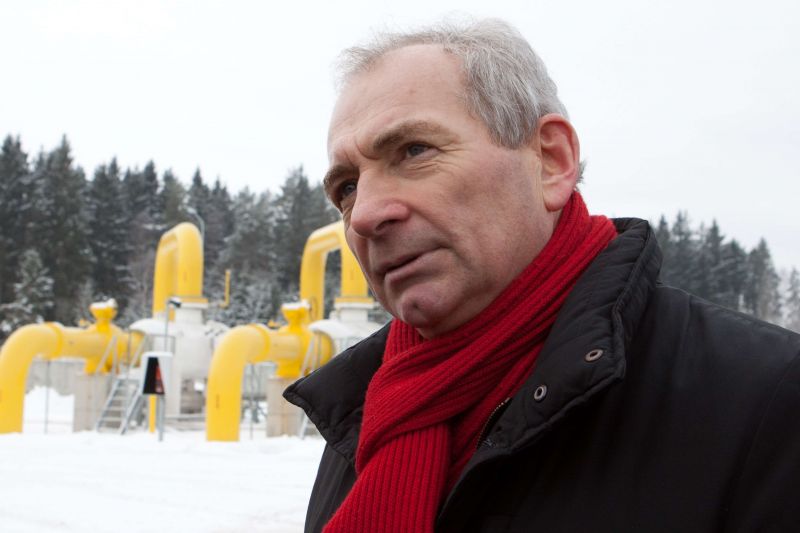
Viktoras Valentukevičius is concerned that this may drive down the company’s sales and it might suffer losses.
“It is an entirely separate facility [the terminal], which has nothing to do with the transmission system. And its future costs are included in the prices of our company’s services to consumers. The board sees two problems – it creates a certain conflict between the company and its customers, although we will not get any extra money, which the users will have to pay,” Valentukevičius said at Wednesday’s meeting of the National Control Commission for Prices and Energy.
Saulius Bilys, the head of the Strategic Development Unit at Lietuvos Dujos, would not say much.
“It is a classic example – the sales decline when the prices grow,” he told the reporters.
The commission on Wednesday approved new prices, effective in the first half of 2013, set by Lietuvos Dujos (Lithuanian Gas) for household consumers.
Lietuvos Dujos says that the price for consumers is going down due to a fall in the price of gas imported from Russia and because the company will have to store less gas in Latvia's Incukalns underground gas storage facility. However, this is in part offset by an extra tariff component related to the country's planned liquefied natural gas (LNG) terminal and a mark-up to cover the difference between this year's estimated and actual gas import prices.
The so-called add-on of the LNG terminal will amount to 37.5 litas (EUR 10.9) per 1,000 cubic meters (ex VAT).
The leader of the Social Democratic Party of Lithuania and candidate for prime minister, Algirdas Butkevičius, has recently said that new authorities might review the model of LNG terminal’s funding, under which gas consumers will contribute 114.1 million litas for the terminal’s funding through the add-on next year.
Opposition to this model is led by nitrogen fertilizer producer Achema, which is Lithuania’s largest gas consumer.


