"Every country has the right to decide on its energy development and choose the cheapest and safest ways to provide energy to its consumers," the prime minister told journalists who asked how Japan's decision might influence the Visaginas nuclear power plant project.
Kubilius said he met his Finnish counterpart on the way to China earlier this week, and he confirmed that the Nordic country planned to continue developing nuclear energy.
"Finland now has four reactors, and is building a fifth one. The parliament has made decisions to start building another two reactors in 2015, and they will have seven reactors in 2020, and 60 percent of power will be produced by nuclear power plants," the Lithuanian prime minister said.
"Our neighbor Sweden has also approved a very clear strategy, and now produced 40 percent of power in ten nuclear facilities, and will build new ones once their time expires," Kubilius said.
"So we have various examples and we are choosing a path that is the most beneficial for consumers in Lithuania. We have no gas, oil, or large financial resources to subsidize more expensive alternative energy," the Lithuanian premier said.
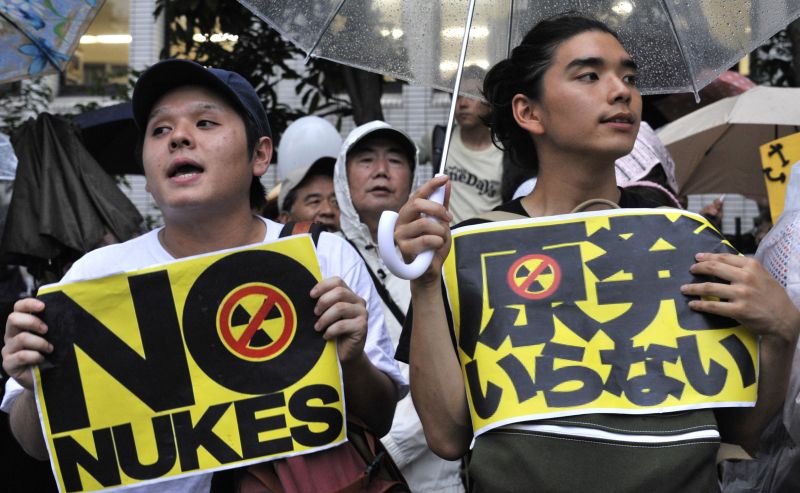
Japan announced on Friday its plans to stop using nuclear energy over the next three decades amid public pressure following the Fukushima nuclear disaster.
Nuclear power production will be stopped by 2040 with the country gradually shutting down all of its nuclear reactors, which once satisfied a third of Japans' needs.
Japan will join countries like Italy, Switzerland, and Germany that want to move away from nuclear energy by 2022.


