
According to Lietuvos Geležinkelių Infrastruktūra CEO Karolis Sankovski, ensuring railway safety remains one of the company’s key goals.
“We are aiming to reduce the number of serious accidents at railway approaches to zero. All means are being used to achieve this goal, from public education to the elimination of problem areas by building bi-level railway intersections, such as tunnels, viaducts or underground pedestrian crossings,” says Mr Sankovski.
Safe infrastructure
In implementing the Rail Baltica project, special attention is being paid to the development of a safe traffic infrastructure – problematic single-level pedestrian crossings and level crossings are being eliminated and replaced with modern underground tunnels for vehicles, cyclists and pedestrians.
Existing viaducts are being reconstructed, and new ones are being built to ensure the safety of road users further. It is planned that upon completion of the project, all vehicle and pedestrian railway crossings will be bi-level, and the Rail Baltica line will be fenced along its entire length.
Train traffic will be managed by the new-generation European Rail Traffic Management System (ERTMS). Passenger stations will have all the necessary infrastructure to make travelling by train a smooth, enjoyable and straightforward experience.
Modern solutions implemented in Kaunas
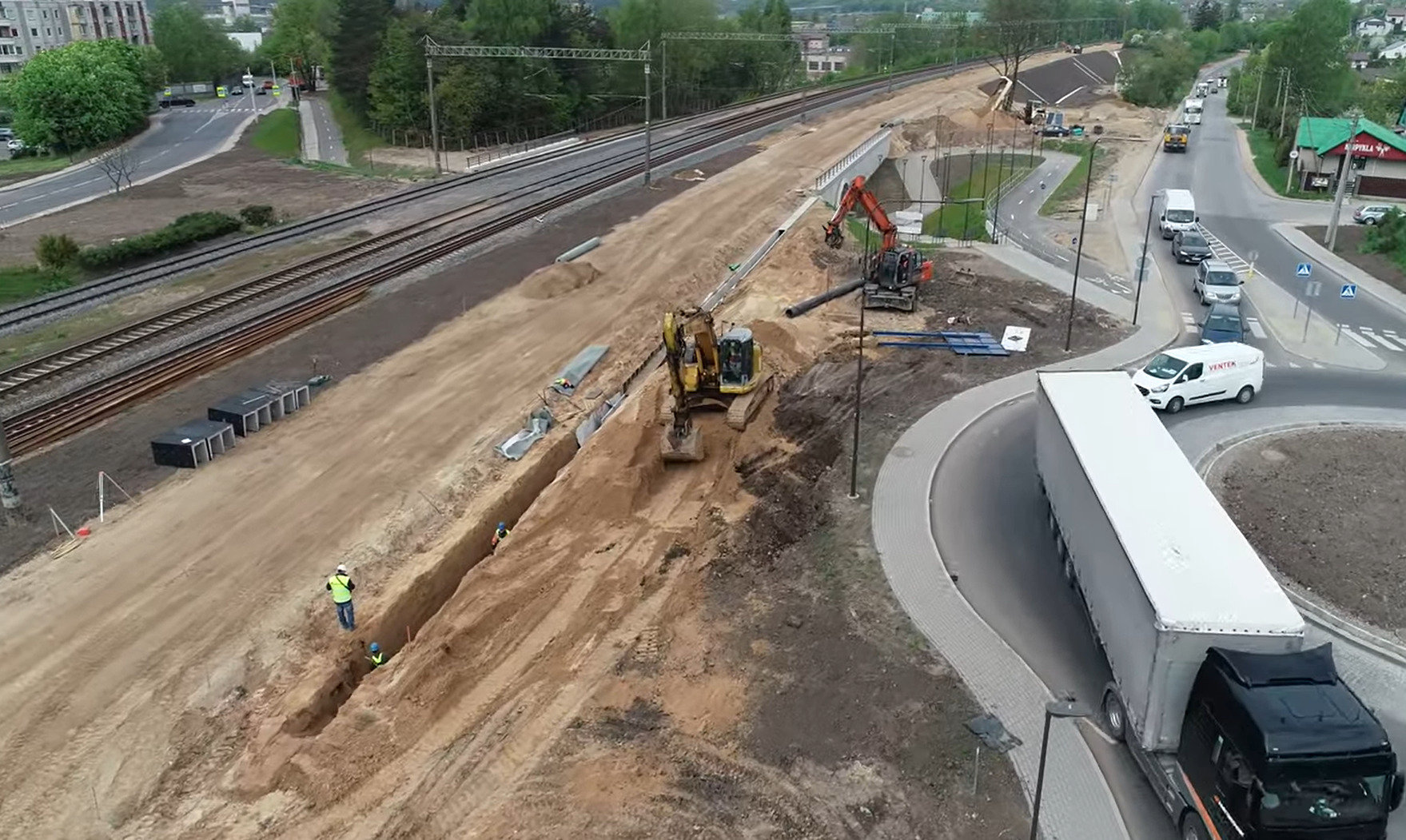
The Rail Baltica project being implemented at the Kaunas junction station has already solved a problem that had plagued locals for years – in place of the Amaliai level crossing, where drivers used to waste their time in kilometres of congestion, spacious and modern underground tunnels have been built for cars, cyclists and pedestrians.
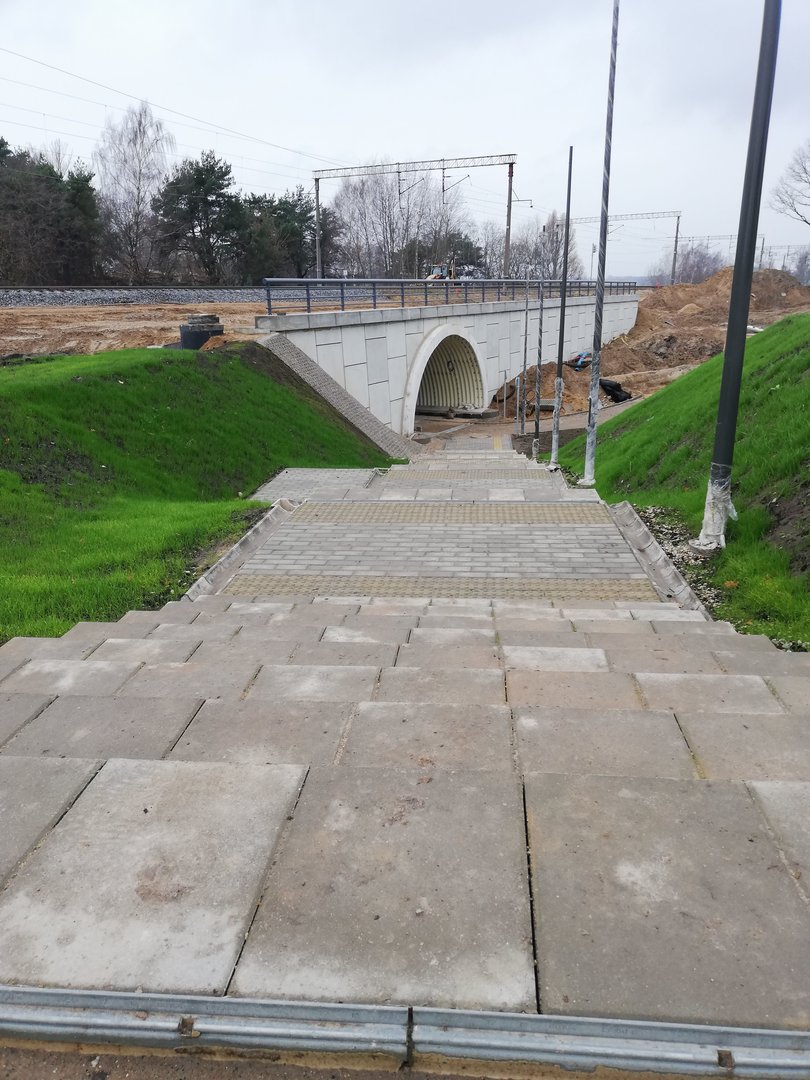
The main underground railway crossing point is installed 500 metres from the existing Amaliai crossing, in the direction of Kaunas Reservoir. This will become the main underground infrastructure object under the railway for organising road traffic on the Kaunas south-eastern bypass. The main structure consists of a four-arch underground tunnel: the two tunnels in the middle are designed for cars and are flanked by two smaller tunnels for pedestrians and bicycles.
The second underground railway crossing point in Amaliai is a tunnel built in the same place as the old Amaliai crossing through a separate project of Kaunas City Municipality and is for pedestrians, cyclists and emergency vehicles, such as police cars and ambulances. Once the Kaunas-Palemonas project is complete, the city of Kaunas will have a total of three tunnels for cars and four underground crossings for pedestrians and cyclists.
Mr Sankovski also announced that increasing road safety in Kaunas definitely does not end there. Preparation of the Rail Baltica Kaunas junction station engineering infrastructure development plan will begin in July, with the task of coming up with solutions for reconstructing the Jiesios g. and Sąnašos g. crossings as well as the Rokelių g. crossing in Kaunas District Municipality into two levels. The plan will also consider possibilities for building pedestrian viaducts over the Palemonas and Kaunas railway stations. All of these solutions are planned to be implemented together with the Rail Baltica project by 2026.
“It is clear that the new European-standard infrastructure will not only ensure good connections between the parts of the city that are separated by rail, but will also serve the important goal of increasing the safety of all road users,” says Mr Sankovski.
Accidents can be avoided
Specialists note that rail traffic in Lithuania is safe and painful accidents can be avoided altogether, but this requires responsible behaviour on the part of drivers, pedestrians and other road users. Accident statistics show that in most cases, the main cause is improper road user behaviour by the railway when the risk is not adequately assessed, as well as a lack of attention or misunderstanding road signs.
“When talking and educating the public about safe conduct at level crossings and by the rails, we pay special attention to children, runners and cyclists, as well as hikers, mushroom pickers, people who live near railways, and drivers,” says Mr Sankovski.
According to him, attention, caution, vigilance, environmental monitoring and foresight are important for every road user. This is especially true when crossing level crossings, so users should never let down their guard – after all, the train may be much closer than it seems.
“Therefore, pedestrians, drivers and other road users should all behave responsibly when crossing level crossings and heed the road signs, the position of the barrier, the traffic lights, the sound signals, and the crossing guards,” says Mr Sankovski.
A 12-year initiative
According to the European Commission, rail accidents account for a relatively small proportion of road accidents – less than 2 per cent of all road fatalities – but it still recommends that all Community countries implement road safety solutions and educate the public in order to prevent painful accidents altogether.
In 2009, several European rail associations signed a commitment on behalf of the European Road Safety Charter. This was done to adopt the common position that road and rail operators must prevent accidents at level crossings. Lietuvos Geležinkeliai has also joined this initiative, which is supported by the International Union of Railways (UIC).
The first European Level Crossing Awareness Day was held in June 2009 and was followed by the International Level Crossing Awareness Day, which has been commemorated since June 2010.
Translated by Metropolio vertimai – your trusted translation partner


