The book you can sniff out will stay
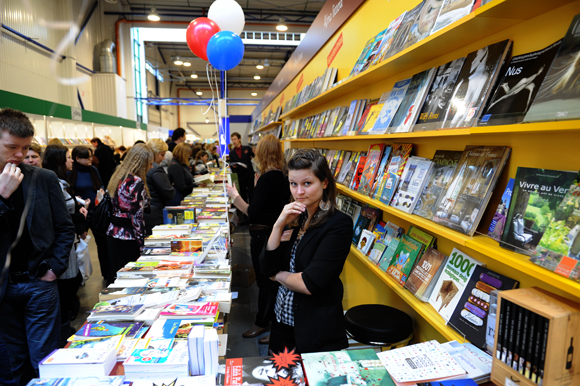
The recent Vilnius Book Fair has shown that interest in books has not vanished. On the contrary, representatives of more than 250 publishing houses from nine countries pondered a glimmer that hope may be shining on the horizon. “Well, not much hope for optimism yet, but the fair has shown that the book is not yet to go off the shelf. To speak of the sector’s rebound would be too early,” Lolita Varanavičienė, president of Lithuania’s Publisher Association (LPA) and director of Tyto Alba, a publishing house, was quoted as saying in the fair.
The statistics, however, point out clearly to the shrinkage of national publishers – from 589 in 2008 to 523 in 2011. The latter number is half the estimate in 2000.
Aida Dobkevičiūtė-Džiovėnienė, LPA executive director, translates the plummet this way: “We had been seeing yearly 15-20 percent fewer published books since 2008. The curve stopped dropping in 2011 and even inched up a little bit, but I do not dare call it a way back to a strong business,” the LPA director said to The Baltic Times.
According to the LPA, in 2008, 4,580 published book titles were printed, followed by 3,972 in 2009; 3,177 in 2010 and 3,282 in 2011.
If the e-book distribution is expanded the way it is now – illegally circulating bootleg e-books – the traditional publishers will be dealing with a stronger blow every year. The public opinion that intellectual product has to be free of charge online is really very deplorable.
According to the LPA, in reality, only 30-40 publishers have an impact on the national book market. And only two of them, Alma Littera and Vaga, are trendsetters. “There are a whole lot of publishers who put out only a brochure or a few booklets and still report being involved in publishing,” the LPA director notes.
Bootleg e-books threaten publishers
The high book price is seen as the biggest hindrance for the book business. But the price will not go down any time soon. “Book lovers swarmed the recent book fair stalls, to be able to buy a book without the mark-up that bookstores and supermarket bookstores add to the price. It hikes up the final cost considerably,” Varanavičienė, of Tyto Alba, notes. She says the way out from the readers’ adverse situation could be an expansion of the online book trade. E-books are considerably cheaper, but they cause a major headache for the LPA executives.
“If the e-book distribution is expanded the way it is now – illegally circulating bootleg e-books – the traditional publishers will be dealing with a stronger blow every year. The public opinion that intellectual product has to be free of charge online is really very deplorable,” Varanavičienė says regretfully.
Dobkevičiūtė-Džiovėnienė is especially concerned with the ongoing digitalization process. “Hefty state funds have been allocated for the purpose to go along with the technologies. The state wanted to pursue digitalization of all books, but after we gave a big fight, the Seimas [Lithuania’s Parliament] conceded allowing digitalization only of books older than 70 years. Digitalization of recently printed books would be a knock on traditional publishers,” says the LPA executive director.
An even greater danger is posed by abundant book pirates, she says. “Most publishers now possess a digital copy of a printed book. However, they often do not want to put the book on the Web, as this encumbers sales of paper books,” says the LPA executive director.
She notes that despite attempts to curb e-pirates, they find ways to digitalize published paper books and put them online.
International player on its way
Mickevičius, director and owner of Versus Aureus, a publishing house, describes last year as mostly bump-free and smooth. “No major redistributions took place last year. Perhaps the only publisher, a dominating one, Alma Litera-Šviesa, took advantage of its rivals’ shrinking current assets and increased its prevalence in the market,” the director says.
He predicts that 2012 can bring some change to the market. “It is a public secret that international publishing house Paragon is set to step into Lithuania this year. As far as I know, it is in the process of establishing its office in Vilnius now,” Mickevičius told The Baltic Times.
Lithuania is notorious for having one of the highest publishing costs. Just bear in mind the 22 percent VAT that no European country exceeds for the publishing sector.
According to him, Paragon will probably target the international book market from the Vilnius office. “The Lithuanian market is too small for such a competitor. I believe, lower publishing costs in Lithuania – from book layout to printing – have played a vital role in making the decision. The publishing house will become a serious competitor to our publishers, putting out illustrated translated books. But I doubt whether Paragon will take on publishing Lithuanian authors,” Mickevičius says.
The timing of the international player's arrival is very well though-out, he claims. “They enter the local market when recovery is picking up,” he says, adding, “The willingness of a well-known large international player to assume a certain risk of investment into the field that many believe is trouble-ridden shows that our publishing market is not hopeless.”
Dobkevičiūtė-Džiovėnienė was caught off-guard about the Paragon intentions: “Oh, really? And what are they going to do here? Isn’t Lithuania just too small for them?”
She disagreed with Mickevičius on publishing costs being lower in Lithuania than elsewhere in Europe.
“I’d say the opposite: Lithuania is notorious for having one of the highest publishing costs. Just bear in mind the 22 percent VAT that no European country exceeds for the publishing sector,” the LPA director emphasized.
The bigger the stronger
Mickevičius says Paragon will not be the first foreign publisher to have entered the local market. “Effectivelly, Svajonių Knygos [Dream books] should also be considered as an affiliate of an advertising-avoiding foreign company. Several times have I heard pompous talks of the arrival of foreign publishing houses, but, ultimately, they turned out to be represented by a single German and his wife and a computer in their kitchen,” the publisher relates.
He says there are many local “kitchen” publishers in the country.
Speaking of other major events in the market, Mickevičius discerns the merger of Baltos lankos and Pegasas chain bookstores. “After the takeover, Pegasus chain dictates its rules of the game ruthlessly. Whether others like it or not, one has to adapt to it,” he notes.
The publisher says Versus Aureus is about to breathe a sigh of relief after the 2009 bankruptcy of two large book wholesalers. “Quite honestly, we were on the verge of collapse as losses were mounting. To avoid bankruptcy, we had to make salary cuts, both for staffers and authors, as well as scrupulously negotiate payment postponements with printing houses. Though the bulk of the troubles have been overcome, the financial flow has not yet reached the pre-crisis level,” the publisher acknowledged.
Millionaire-turned-bookstore-owner
You may believe that the bookstore business is a low investment risk businesspeople take, and that is exactly the case of Ignas Staškevičius, a former millionaire stakeholder of Vilniaus Prekyba (Vilnius Trade) who decided to open up a 100-square-meter bookstore, Sofoklis, in the very heart of Vilnius. The new book market player has stocked his shelves not only with paper books, but e-readers too.
“The idea of Sofoklis is positioning itself not only as a traditional book sale place, but also as a store that is engaged in broader assortment sales. Thus alongside the books, at lower prices than in most Vilnius bookstores, we sell book accessories, tablet computers and e-readers. Those are the segments tightly related with modern leisure. A modern person can hardly do without these items. Therefore, we expect that the setting will be the exceptionality for the bookstore,” says Kristina Vasiliauskaitė, director of Sofoklis, the bookstore operator.
She says the company invests a lot into book selection. “To describe it tersely, our book assortment is rather varied, but thoroughly selected, focusing on two criteria – novelty and leisure,” the director says. She was cautious when asked about expansion of the new bookstore. “The first months in operation have been quite good, but we are still exploring buyer expectations and moods. A lot will depend on how successful the first Sofoklis bookstore will be,” Vasiliauskaitė stresses.
Sofoklis is part of Padme Invest, owned by Staškevičius. Padme Invest also operates the publishing house Metodika.
Shorter payment terms is the secret
What does the term “leisure books” means to the Sofoklis director? “It makes up a variety of books, ranging from fiction, to non-fiction, culinary, self-help and business books. However, the latter are dedicated more for self-education than studying. The bottom line is we sell books that we are most likely to pick up on our day-off. And, sure, their timeliness, as most of them are just off the press,” Vasiliauskaitė says.
Let’s remember how fast data storage appliances changed one another, and how frenetically laptops and tablet PCs have become trendy. Meanwhile, the journey of e-readers to Europe has been suspiciously belated.
The bookstore suggests not only getting e-readers, but trying them out, right on the spot. “We offer Apple products. Both e-readers and tablet computers are for demonstration purposes, and all bookstore visitors are welcome to see how they work. This is particularly important speaking of e-readers. We want our visitors to feel the difference between color and black-and-white e-readers. For some people in Lithuania, e-readers are still a relevantly new item, and we help them to discover it in our bookstore,” the bookstore director stressed.
Do you wonder how a single bookstore manages to offer newest books at lower prices? Mickevičius of Versus Aureus ponders he knows the secret: “Obviously, the bookstore most likely offers shorter payment terms, which for a publisher short on liquidity is a crucial thing. It is always better to have one litas in your cash register today than two litas tomorrow.”
E-books do not do well in Lithuania
Does the millionaire’s business plan/whim, embodied in the book and the gadget store, have a chance to pan out?
The Versus Aureus publisher does not have a straight answer. “Digital technological innovations bring up a swift reaction of consumers: either the novelty finds its spot in the market, or not. Let’s remember how fast data storage appliances changed one another, and how frenetically laptops and tablet PCs have become trendy. Meanwhile, the journey of e-readers to Europe has been suspiciously belated. I can tell why. The main reason for the delay is copyright and author rights’ management on the Web. As the experience of music and cinema production distributors has shown, it is effectively impossible to guarantee protection of author’s rights online,” the book entrepreneur says.
Nevertheless, Mickevičius agrees that, in the long term, Sofoklis, provided the millionaire owner’s conception works out, will be a serious challenger to other publishers. “The lower-price bookstore will make others overhaul their pricing policies as well,” he is convinced.
Dobkevičiūtė-Džiovėnienė calls Sofoklis “a smart idea.”
“It is a pilot project. And I believe it will shape up our bookstores in the future. All bookstores will have to adapt to the technological advancements. And sure, the book will have to be available in different formats,” she said.
Book-less future generations
Mickevičius says he’s got “a hunch” the new “computer” generation will barely need books. “Today's teenagers are used to getting all information they need for free and non-punishably from the Internet. I don’t believe the situation will change any time soon,” Mickevičius says. He adds: “And I hardly see room for the paper book in the future. Publishing of paper dictionaries, encyclopedias and some other information-containing books has literally ceased.”
Alma Littera director general Gintautas Mažeika, however, remains optimistic about the prospects for the traditional book. “I see digitalization as an opportunity for both customers and publishers. I believe the market will be enough, both for traditionalists and novelty seekers. It makes no sense to wage war against the process. Our publishing house does the opposite: expand the e-book market, especially focusing on e-sales, both of conventional books and e-books,” says Mažeika.


