Amid investors' worries over the fate of problem eurozone countries, the euro-US dollar exchange rate has almost fallen to a level seen at the height of the global financial crisis.
"A whole bunch of problems, including Greece's possible eurozone exit, the problem of Spanish banks' solvency, and France's unwillingness to accept the need for austerity and to seek compromises with Germany, has pushed down the euro's value against the dollar," the paper quoted Nerijus Mačiulis, the chief economist at Swedbank Lithuania, as saying.
On one hand, a cheaper euro creates more favorable conditions for exports to third countries, whose currencies have appreciated against the EU's common currency, he said.
"On the other hand, with the weakening of the euro, prices for gas, oil and other raw materials for which Lithuania pays in US dollars go up. However, exchange rate fluctuations are small, and, therefore, the impact on the country's economy is almost invisible. Certainly, if more serious splits in the eurozone started, weaker demand for Lithuanian products in Europe would then have a much more dramatic effect on the national economy not only due to the currency's depreciation, but also to negative expectations," the analyst said.
Gitanas Nausėda, an adviser to SEB Bankas' president, said that, as far as trade is concerned, Lithuania should be more worried about medium-term developments. "If Southern Europe experienced a deep crisis and the eurozone's growth slowed down again, we would face problems not so much because of our exports to the southern region, which are not significant, but because of our large export volumes to Germany, France and other big EU countries," he said.
2012-06-04 11:41
Weaker euro - no threat to Lithuanian business
Analysts say that the weakening of the euro against the US dollar is not posing any serious threats to Lithuania's businesses, the daily Vilniaus Diena reports.
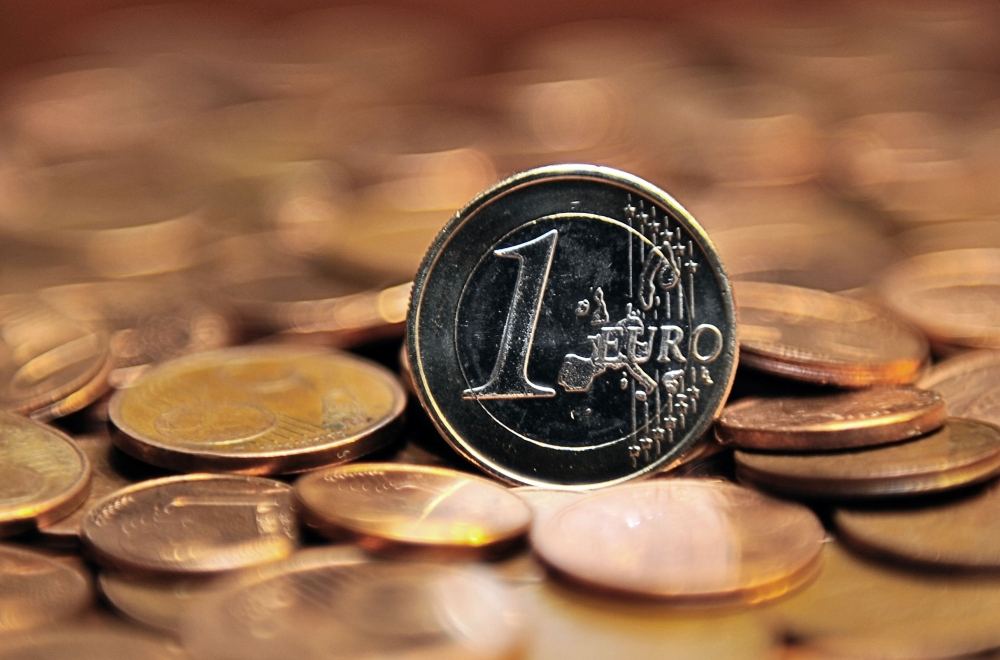
Euro / AFP/„Scanpix“ nuotr.
Report mistake
Successfully sent
Thank you


