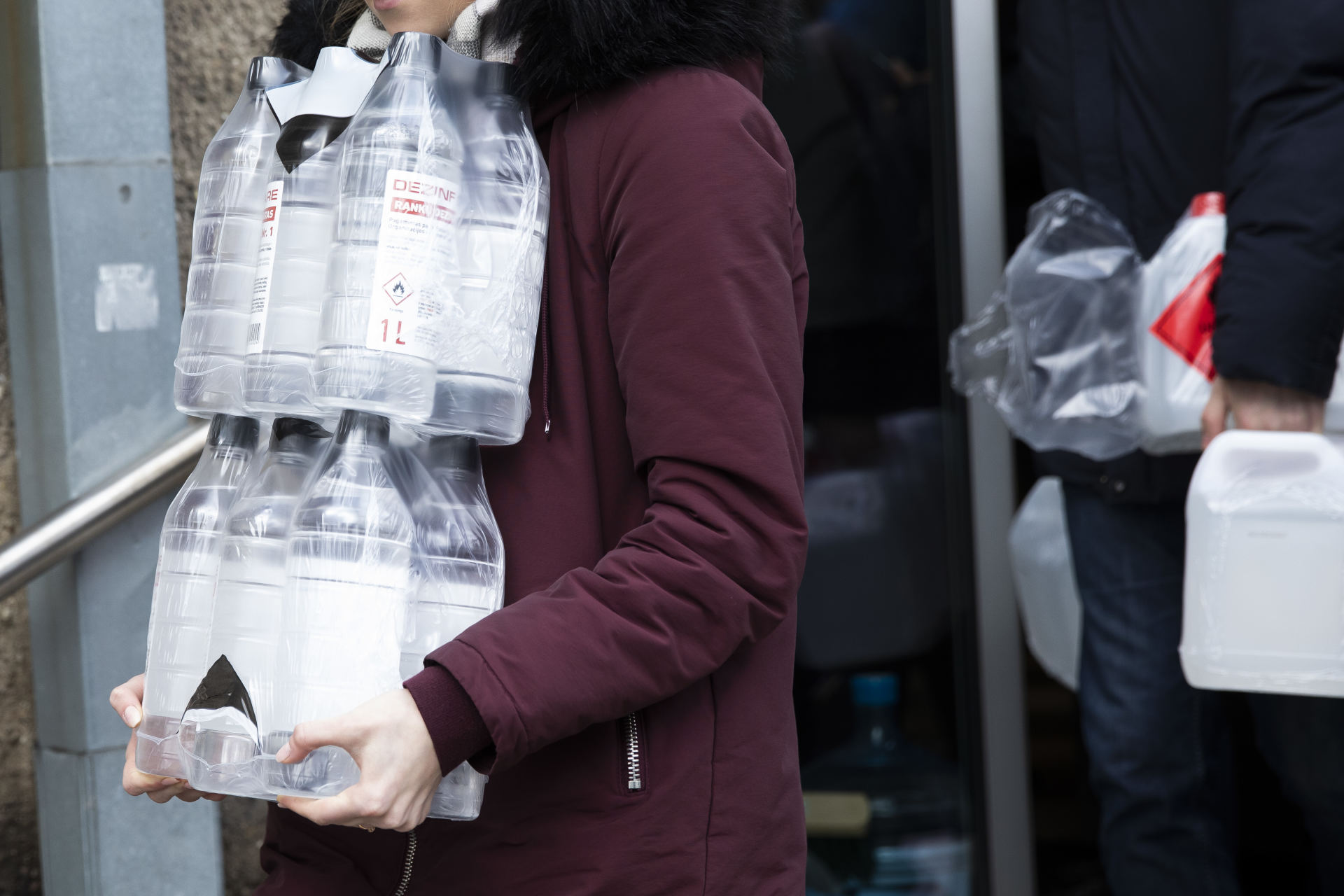
The first company to receive a license to produce surface disinfection liquid from alcohol was the Pasvalys- based factory bioethanol factory Kurana. The Pasvalys company began production of hand disinfectant several weeks ago, and in April it plans to produce a million litres of surface disinfection liquid. Kurana will be offering surface disinfectant liquid firstly to Lithuanian companies and institutions and will export only after filling a demand in the domestic market.
“If several weeks ago, there was a lack of hand disinfection liquid on the market or its price was exceptionally high, now with mass production launched, we have essentially satisfied the demand for this product. However, reports are on the rise in Lithuania on coronavirus cases in companies – premises must then be closed, and staff disinfected, while due to halted operations, companies face significant losses. As such, interest in surface disinfection is very high right now because ever more institutions and companies have begun to disinfect their premises regularly,” Kurana director-general Jurgis Polujanskas stated.
According to the head of Kurana, the demand for surface disinfectant will rise even further when quarantine conditions are relaxed, with stores, catering establishments and service companies, as well as hairdressers and beauty parlours renewing their operations.
The coronavirus is transmitted by air, droplet spray, thus it is difficult to avoid it. The virus can survive on surfaces from several hours to several days. In comparison, flu viruses can survive on surfaces for around 48 hours. As such, companies, which continue to operate – retail centres, pharmacies, delivery companies – must disinfect production premises and warehouses up to several times per day in order to ensure the safety of their staff and other citizens.
Surface disinfection liquid differs from hand disinfectant liquid in its composition. The National Public Health Centre (NVSC) has issued a license to Kurana for manufacturing surface disinfection liquid, which is produced from alcohol, isopropyl and water.
This liquid is used on alcohol-resistant surfaces; door handles, tools, equipment (except medical equipment and its surfaces) disinfection in healthcare institutions (hospitals, procedural offices, dental clinics and others), public purpose objects (hairdressers, beauty parlours and others), food processing companies and food preparation locations, public catering objects and retail companies.
The primary operations of Kurana are based on bioethanol production, however, during this difficult period, the company has begun to produce disinfectant liquid for hands and now – also for surfaces. According to company head J. Polujanskas, effective cooperation with the Ministry of Healthcare and the NVSC has helped reorient production – the production license was issued within several days.
Due to this, in cooperation with the Ministry of Energy, Orlen Lietuva and the country’s petrol station networks, an agreement was reached to temporarily sell petrol, which contains less than 10% biofuel, while ensuring necessary quality standards. This agreement has allowed Kurana to allocate alcohol to the production of disinfectant liquids.


