“If we can say that over the last week, Chinese manufacturing and logistics links have returned to almost full capacity, then in the USA, we are observing the opposite – due to the impact of COVID-19 and the isolation of staff, factories are closing, and the country is becoming increasingly difficult to reach for external transport flows. Meanwhile, in Europe, the situation is also constantly changing, and there’s no common tone. Different countries are making various decisions, with some inclined to restrict movement more, while others take a more liberal view and others yet simply develop paradoxical situations, where restrictions are not dramatic. Still, warehouses have hardly anyone working because everyone is self-isolating at home,” freight forwarding and supply chain management company Balti Logistika Lithuanian branch head Jūratė Cimanavičienė explains.
According to her, chaos in the skies of the Old Continent is causing various obstructions to also Lithuanian transport companies, who are left unable to return their drivers home because them returning with empty vehicles leads to losses and currently there is a lack of cargo for trucks headed toward Lithuania.
“Businesses are facing problems because it is truly difficult to rapidly maintain orientation in such an undefined situation, as the logistics sector has landed in. It is important to keep monitoring information and communicating with partners in other states, predict what changes await. In Lithuania, in the transport domain, it is currently a fairly active period, we receive numerous and varied inquiries because businesses are seeking to adapt and are changing their decisions based on the developing situation,” J. Cimanavičienė says.
During the pandemic, the world’s logistics is dominated by medical goods: masks, respirators, lab equipment, reagents, various medical devices. Also, there is a noted global growth in demand for long-lasting food products. J. Cimanavičienė states that this niche has already been successfully made use of by several Lithuanian companies.
“Already with the quarantine beginning, Lithuanian companies successfully increased instant soup and noodle exports to the Scandinavian countries and the United Arab Emirates,” the specialist says.
An extra role for Klaipėda
According to J. Cimanavičienė, with the offerings of air flights having greatly diminished, a part of Lithuanian businesses are delaying their plans to send goods, given a significantly increased price of delivery, while another part is simply facing demand problems due to reduced trading. However, those who can transport their goods over a long period now choose to do so by ship.
Shipping companies are eagerly awaiting cargo because the ripple caused by the pause in Chinese imports is now followed by a second, which is now due to worldwide store closures and decreases in global sales. These two ripples have formed a glut of vacant ship containers, while also reducing transport costs.
“The only ones in the maritime shipping market to not experience significant change are tanker operators because most countries and trading companies are making use of the opportunity and are rushing to obtain supplies oil, given its record low current pricing. However, once reserve reservoirs are filled, this wave will settle because the demand for oil products has significantly decreased, given the restrictions on individuals’ movement, which will persist over the coming months,” J. Cimanavičienė says.
According to the specialist, to maintain freight transporting prices, the large global maritime shipping companies have already begun to reduce their container capacities on their main routes.
“Capacities are being decreased by up to a third in certain trade routes. The largest reductions have been made on the main global trade routes – ones from Asia to Europe and also in the Pacific Ocean. A paradoxical request is also heard that slow transportation is becoming an advantage. Senders, who cannot cancel orders, are simply seeking slow shipping from Asia for a while the crisis lasts in order to avoid harbour warehousing costs,” J. Cimanavičienė says.
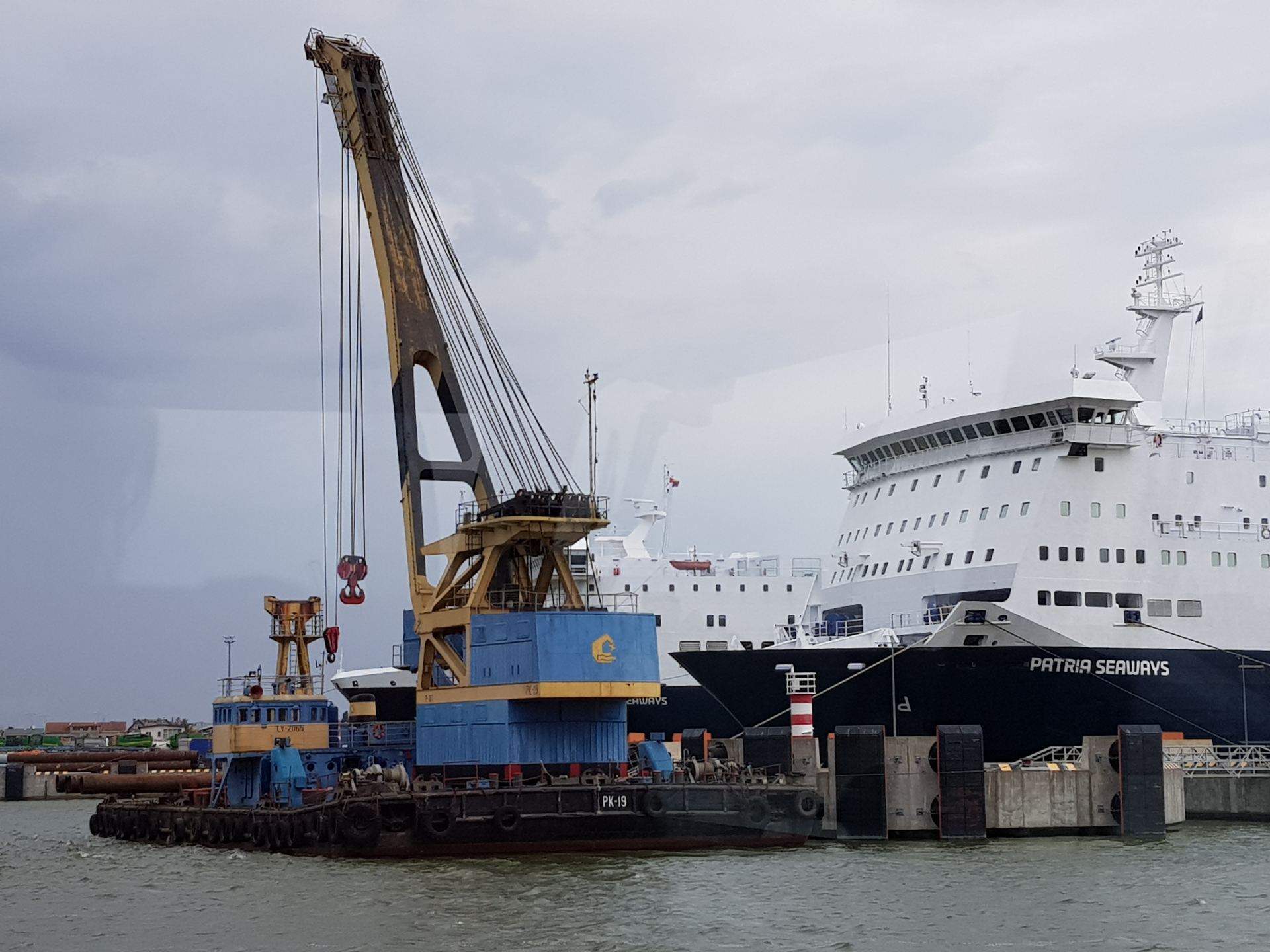
Klaipėda will be able to make use of the backlogs formed in Europe’s major ports. One of the world’s largest shipping lines Mediterranean Shipping Company has declared Klaipėda Port, alongside Freeport (Bahamas), Gioia Taura (Italy) and Las Palmas (Spain) as a supplementary interim container transit stop for clients, who were unable to cancel or halt purchases from Asia and in the coming weeks should hold arrived goods for closed markets.
Flight companies reorient
Another unpleasant blow of the coronavirus pandemic on the logistics business has come to be lengthening confirmations of reservations at airline companies. The main reason for this is the reduced staff numbers. According to J. Cimanavičienė, currently, the approval of reservations in Los Angeles is most disrupted, which is also emphasised by US staff as well.
“Airline companies operating in Lithuania are also seeking to adapt to the situation and instead of offering flights are now periodically offering road routes from Vilnius to Amsterdam, or Frankfurt am Main. Their representatives are displaying initiative, investigating the markets, consulting logistics specialists, whether there will be relevant cargo and if it is meaningful to consolidate. A declined number of small parcel shipments also contributes to this, thus courier companies can now service more commercial contracts and transport larger cargo,” the specialist explains.
According to her, intercontinental cargo from Asia and America is currently often diverted to Amsterdam and Frankfurt am Main because the large airports service more cargo aircraft. From there, cargo reaches the Baltic States by road transport.
“In the last few weeks, cargo has moved smoothly on European roads, without delay, thus it appears that most countries have adapted to the situation and ensured that border queues would not develop,” J. Cimanavičienė notes.
Air and maritime market disruptions have opened the way for a breakthrough in rail transportation. According to J. Cimanavičienė, solely in March, rail cargo flows on the route China – Europe – China have grown 33.4%.


