 Sekite 15min Google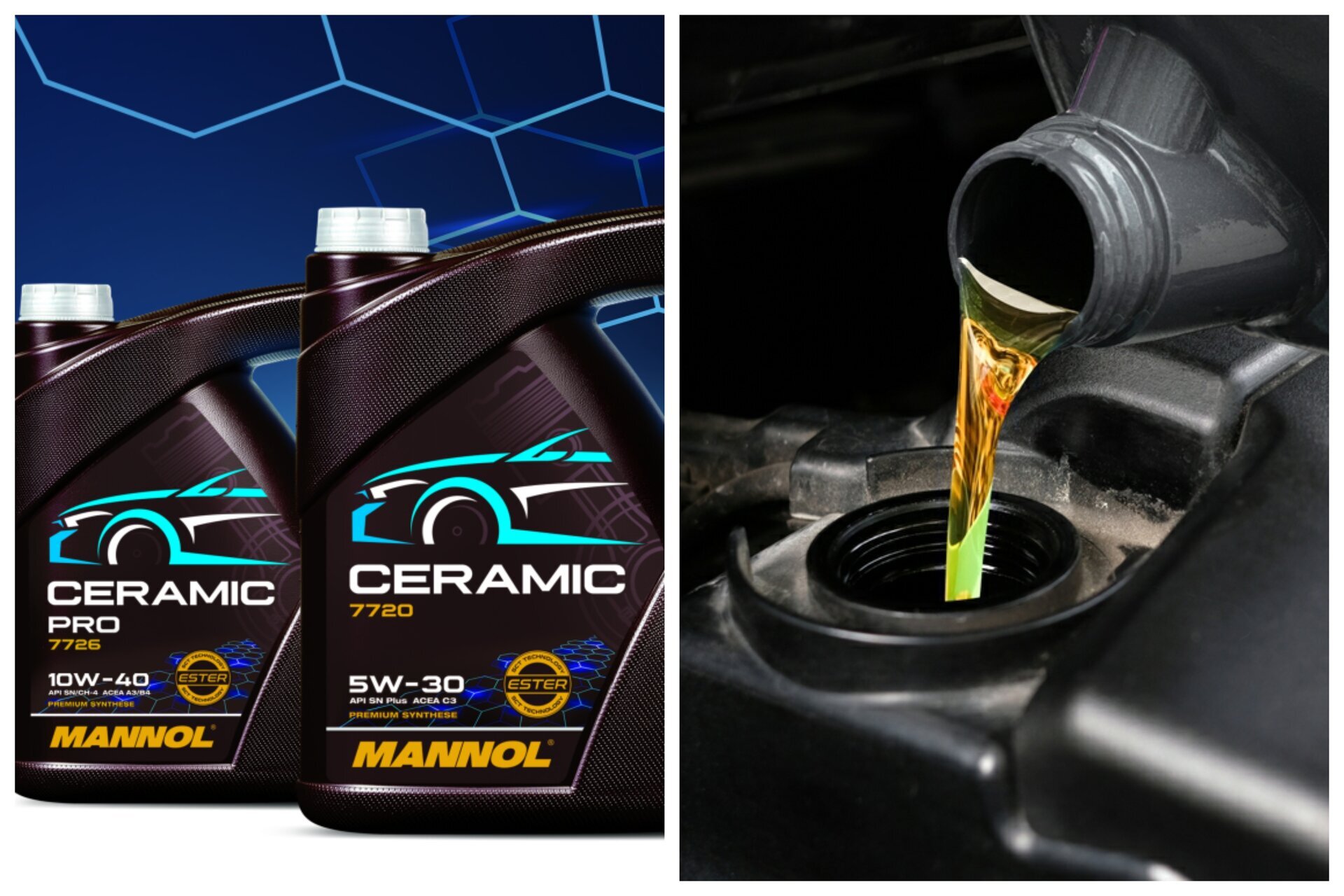
Beyond Lubrication Oil Must Protect Engine Components
Every car owner knows that regular maintenance of the vehicle is a must, but not everyone understands the importance of engine oil in this process. Surveys of drivers that are periodically conducted by European automobile clubs (e.g., Germany's ADAC), maintenance and repair organizations, and lubricant manufacturers reveal that more than 50 percent of drivers are unaware of the differences between various types of oil, 40% cannot remember when was the last time they changed their oil, almost 60% of drivers rely on their car repair shop to choose the oil because they do not want to get involved, and as many as 30% of drivers believe that 'all oils are the same, the only difference is the price'. In other words, most drivers have only a very basic or even incorrect understanding of oil technology, and most view oil as nothing more than a ‘liquid that needs to be changed occasionally.’
There are several reasons for this. Viscosity, standards, various numbers and definitions are information that is simply too difficult for the average driver to remember. Modern new cars require less frequent oil changing: not every 10,000 km, but every 20,000–30,000 km, which means that drivers are less involved in this process. Drivers often rely on repair shops, but not all repair shops choose products of the highest quality. The perception is also often distorted by the marketing of oil manufacturers as some brands emphasize the price, others promote ‘versatility’, and some highlight ‘racing quality’, making it difficult for consumers to understand what is truly important.
This is where something that seemed only a daily routine to drivers and repair shop technicians, inspired Juri Sudheimer, a strategically minded German entrepreneur, to come up with the idea that the automotive market needed a different approach to engine oil. As an entrepreneur, engineer, and expert in chemistry, Sudheimer believed it was not only important to ensure the oil was compliant with the requirements of car manufacturers, but also provided real protection for the engine. It was exactly this vision of comprehensive engine protection that was brought to life at the SCT Lubricants factory in Lithuania, one of the most technologically advanced oil production and research centers in Europe. Having analyzed the dynamics and production potential of the European market, Juri Sudheimer not only appreciated the favorable geographical location of Lithuania, but also the high competence of its specialists. This insight led to the decision to acquire the Norwegian company Pemco Kuras, which was operating in Lithuania at the time. This was the beginning of a brand new era: combining the philosophy of Sudheimer Car Technics (SCT) Germany with the production capabilities of Lithuania resulted in the creation of SCT Lubricants, a modern international production and innovation platform, which has become known throughout the world over the past two decades.
What is Unknown but Should Be Known to Drivers?
Engine oil is a complex product of chemical technology, which is directly responsible for the performance and condition of the engine. It is noteworthy that not all synthetic oils are the same – the properties of different types of oils can have significant differences. In addition to the longevity of the engine, oil can also have an impact on fuel consumption, operating temperature of the engine, formation of deposits, service life of the turbine, and cold start of the engine. These factors should be important to drivers all the time, not only when problems occur. There are hundreds of moving parts in an internal combustion engine, and without proper lubrication they wear much faster resulting in a shorter engine life.
Friction is caused by the contact between two moving surfaces, therefore it is inevitable in an engine. However, the greater the friction, the greater the two main problems that arise:
- increased energy consumption to overcome friction, because the greater the friction, the more energy is converted to heat rather than mechanical energy driving the wheels (which results in increased fuel consumption);
- increased wear and tear of engine parts.
Oil reduces friction between moving parts, diverts heat away from the hottest zones, cleans the engine of soot and metal microparticles, protects against corrosion, and seals the spaces between the pistons and cylinders.
With a thin protective layer between metal surfaces, allowing them to slide over each other with almost no direct contact, wear and tear of the engine parts is reduced significantly. Therefore, various additives are used in modern high-performance oils to create micro-layers on metal surfaces, thereby not only reducing friction but also providing additional protection.
Another important aspect is the quality of the base oil. It is essential for the base oil to have the best possible performance characteristics – appropriate viscosity at different temperatures, stability, and durability.
Another very important idea of Juri Sudheimer was that high-quality oil could be produced in a modern fashion and at an affordable price: consumers should not have to overpay solely for a well-known brand name.
Changes in the Automotive Industry and the Role of SCT Technology
Nowadays the automotive industry is facing major changes profoundly influenced by increasingly strict environmental requirements – a trend with a side effect of less focus on the durability of mechanical components. In order to meet the CO₂ and fuel economy standards, manufacturers develop solutions requiring extremely fluid, low-viscosity oils. The lubrication properties of such solutions are often only sufficient to pass homologation tests.
Engine and transmission manufacturers set their own requirements for oils, which eventually become industry standards or specifications. Major oil manufacturers usually focus on meeting these minimum specifications, which is an economically logical approach, however, it is not always beneficial to the end users willing to ensure the maximum protection of the mechanical parts of their vehicles, enjoy the smooth operation of their high-mileage engines after many years of use, and maintain stable fuel consumption over time. This is where the approach of Juri Sudheimer to go beyond what's required by the standards and make sure the oil offers more than just the minimum set of requirements by actually extending the life of the engine, reducing wear, and protecting the mechanics, really stands out.
SCT Ester and MANNOL Ceramic – Technologies Developed in Lithuania
Today SCT Ester and MANNOL Ceramic, the two technological solutions that were developed in Klaipėda are ranked among the most advanced engine protection methods in Europe. They are two separate but complementary solutions – liquid (esters) and solid (ceramic) engine protection layers.
Esters introduced in 2019 were the first group of widely used synthetic base oils that revolutionized the approach to engine protection. Before them, the main purpose of oil was simply to lubricate surfaces and reduce friction. Esters offered a different perspective that in addition to its lubricating properties, oil must have the ability to interact with metal surfaces and form an exceptionally strong, deposit-resistant, and chemically stable protective coating. Development of this type of base oils offered the possibility of extending the service life of oils, significantly improving their thermal stability, reducing oxidation and deposit formation, reduce engine wear even under extreme operating conditions, and ensure effective lubrication at both very low and high temperatures. These properties make esters the top-class base oils available today. Development of esters was a turning point with a significant impact on engine longevity and paved the way for modern synthetic oil technologies.
The properties of esters depend on their chemical structure: ester molecules contain oxygen atoms, which give the molecule electrical polarity. Metal surfaces naturally attract such molecules, causing esters to ‘stick’ to the metal with much greater force than normal oil molecules without polarity. The adhesion is so strong that the esters remain on the metal even when the engine is turned off and the oil drains into the crankcase. In other words, the metal surface will never be completely exposed – it is always covered with a thin but highly stable protective layer of oil. This type of protection is especially important during cold start, as it is one of the most destructive processes – the wear of the engine components during a single cold start may equal to hundreds of kilometers driven. This happens because upon ignition, the engine starts turning, the pistons move, but the oil pump still has not reached the proper oil pressure, and therefore the surfaces of the pistons and other internal engine parts come into contact almost ‘dry’ for a certain period of time with only a thin layer of oil between them. However, when the esters ‘stick’ to the metal surface, the destructive effect is significantly reduced. Even a very small amount of esters in the oil has a noticeable effect: only 3% of esters can reduce engine wear by up to 20%. The result is impressive, considering the small amount of additives and the extreme conditions at the points of contact between the metals.
This is the exact reason why esters have become a technological breakthrough. When SCT started using them in their products, not only an oil compliant with the standards, but also a technologically advanced product capable of actually extending the service life of engines (even in the cars with high mileage) was introduced to the market. In 2025, SCT launched a new Ceramic oil technology, designed to create a solid protective layer on metal surfaces inside the engine. Ceramics brings engine protection to a whole new level. The protective ceramics is produced of hexagonal boron nitride (h-BN), also known as the white graphite, the layers of which slide very easily over each other. Inside the engine, the h-BN creates a thin but very strong layer on the metal surfaces. Consequently, the contact between two parts is not between two metals, but between two layers of oil covering their surfaces. This is particularly beneficial when starting a cold engine, under high engine loads, or during brief drops in oil pressure.
h-BN ceramics is highly resistant to heat (up to approx. 900 °C), which means its protective properties remain stable at temperatures where the protective layers of conventional oils are significantly weakened.
Most importantly, the SCT Ceramics is not just an additive. It is a specialized range of oils combining the ceramic layer with liquid cover of ester. This type of double protection shields the engine regardless of whether the car is stopped, moving, or operating under heavy loads or unfavorable temperature conditions. It is particularly useful for high-mileage engines as they run more quietly, wear less quickly, and withstand extreme conditions better
Mannol – a Strong Alternative to Much More Expensive Brands
‘As a Lithuanian, I am proud of the success achieved by SCT Lubricants. Not every country can boast of being home to a factory that has developed the value and recognition of the global brand Mannol, and that our people contributed to the success of this international product. The oil brand is not only about the chemical composition of the product. It is a carefully organized mechanism consisting of design, packaging, labels, manufacturing processes, quality control, customer service, logistics, and communication. Lithuanians have turned the idea of the owner, Juri Sudheimer, into a reality, a functioning system, and have contributed to its growth’, says Lukas Šeirys, sales manager at SCT.
Today, the products, processes, and standards developed in Lithuania make Mannol one of the most popular oil brands in Europe and worldwide. This is the best proof that the products manufactured in Lithuania can compete in a global market. A variety of oil formulas are developed and continuously improved here, and each batch of oil is tested for compliance with strict European and international ISO standards.
Local production has practical advantages as well – shorter supply chains ensure better prices and faster response to customer needs, making products always available. Mannol oils feature advanced production technologies. Thanks to the combination of high-quality synthetic base oils and friction-reducing, engine-cleaning, and corrosion-protecting additives, Mannol oils maintain their high lubricating properties throughout their entire service life. Reduced friction in the engine lowers fuel consumption, meaning the car uses less fuel. Improved protection ensures slower wear of the engine parts resulting in a longer service life and lower maintenance costs of the car. The operation of the car engine becomes cleaner, quieter and smoother, which is especially important in newer cars with turbochargers and complex control systems, requiring highly stable oils.
Mannol oil are a strong alternative to much more expensive brands. Mannol oils are a strong alternative to much more expensive brands. They are compliant with the requirements of the original equipment manufacturers (OEMs) for automobiles, and are therefore suitable for use in the latest cars without invalidating the warranty. Most of them have official approvals from manufacturers such as Volkswagen, Mercedes-Benz, and BMW.
The SCT Lubricants plant in Lithuania is currently one of the largest and most technologically advanced oil production facilities in Europe, surpassing many older, well-known manufacturers in terms of size. The plant distinguishes itself not only in terms of production volume, but also in terms of technological solutions. One of the most innovative solutions used here is the ‘single pipe’ raw material supply system, which was adapted into the oil production industry from the food sector. This technology, enabling raw materials to be supplied to production lines with maximum precision, in an environmentally friendly and cost-effective way, was adapted by Lithuanian engineers, and can therefore be considered an industrial innovation created by local specialists.
SCT is already prepared for the era of sustainable packaging as well. The plant has been equipped with a modern metal packaging production line, enabling local manufacture of sturdy and recyclable containers. In addition to this, the company is engaged in the manufacture of plastic packaging, which is essentially a separate line of production ensuring complete supply independence and the ability to control quality from the first to the last step. Such integration allows the factory to be fast, flexible, and independent of external suppliers.
All of the above reflects the motto of the SCT business, which is premium quality at an affordable price. The company’s products are not just another range of oils on the shelf. They are the result of scientific research, modern technology, local engineering, and a clear vision, leading to high-quality products affordable to every driver.


